
Elma Čavčić
Installaties, Keramische technieken, Schilderkunst

What did we say about no games at the table?, 2023
Acrylic and oil on linnen
L 24 cm x B 30 cm
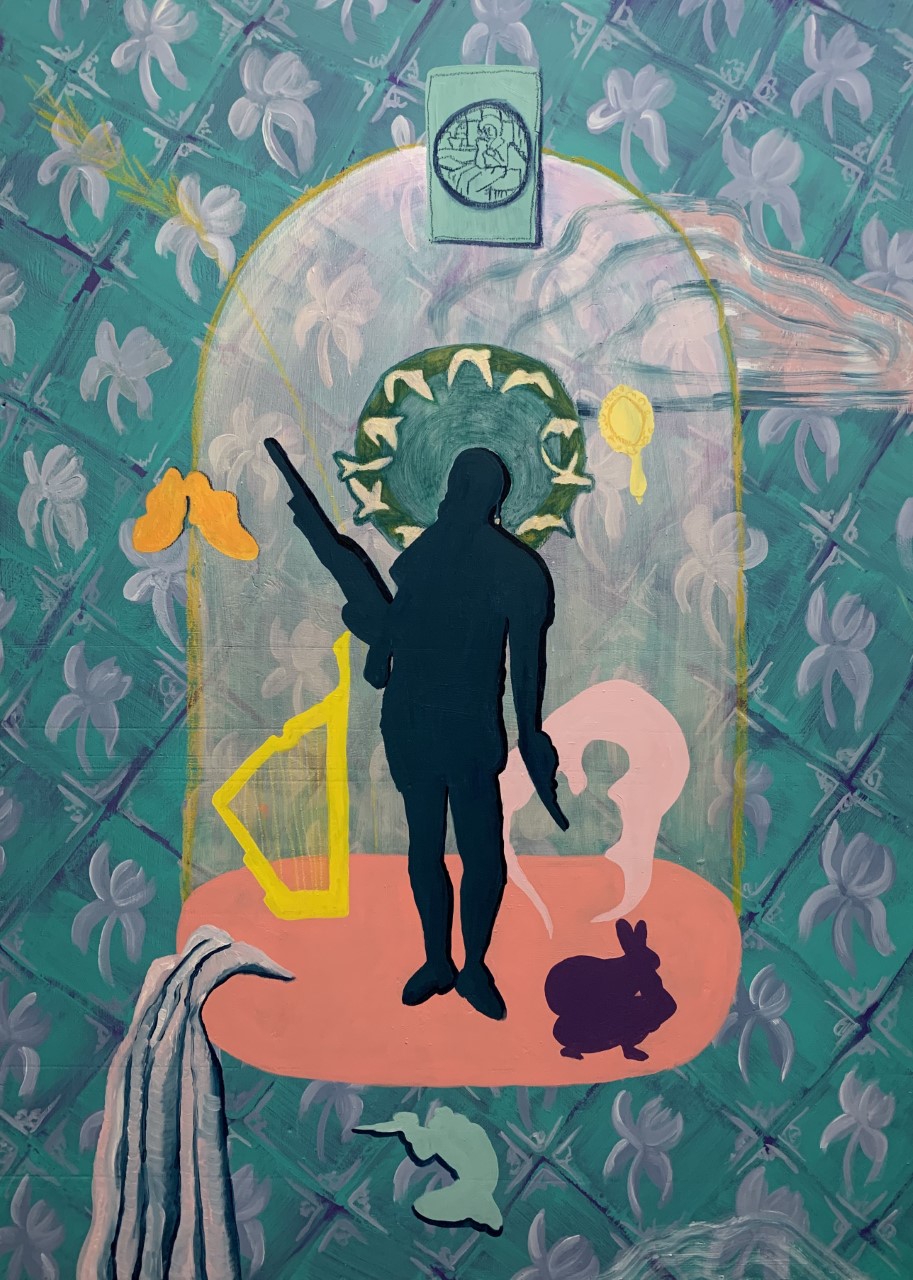
Ode to my mom, 2020
acrylic and oil pastels on wood
L 160 x B 115
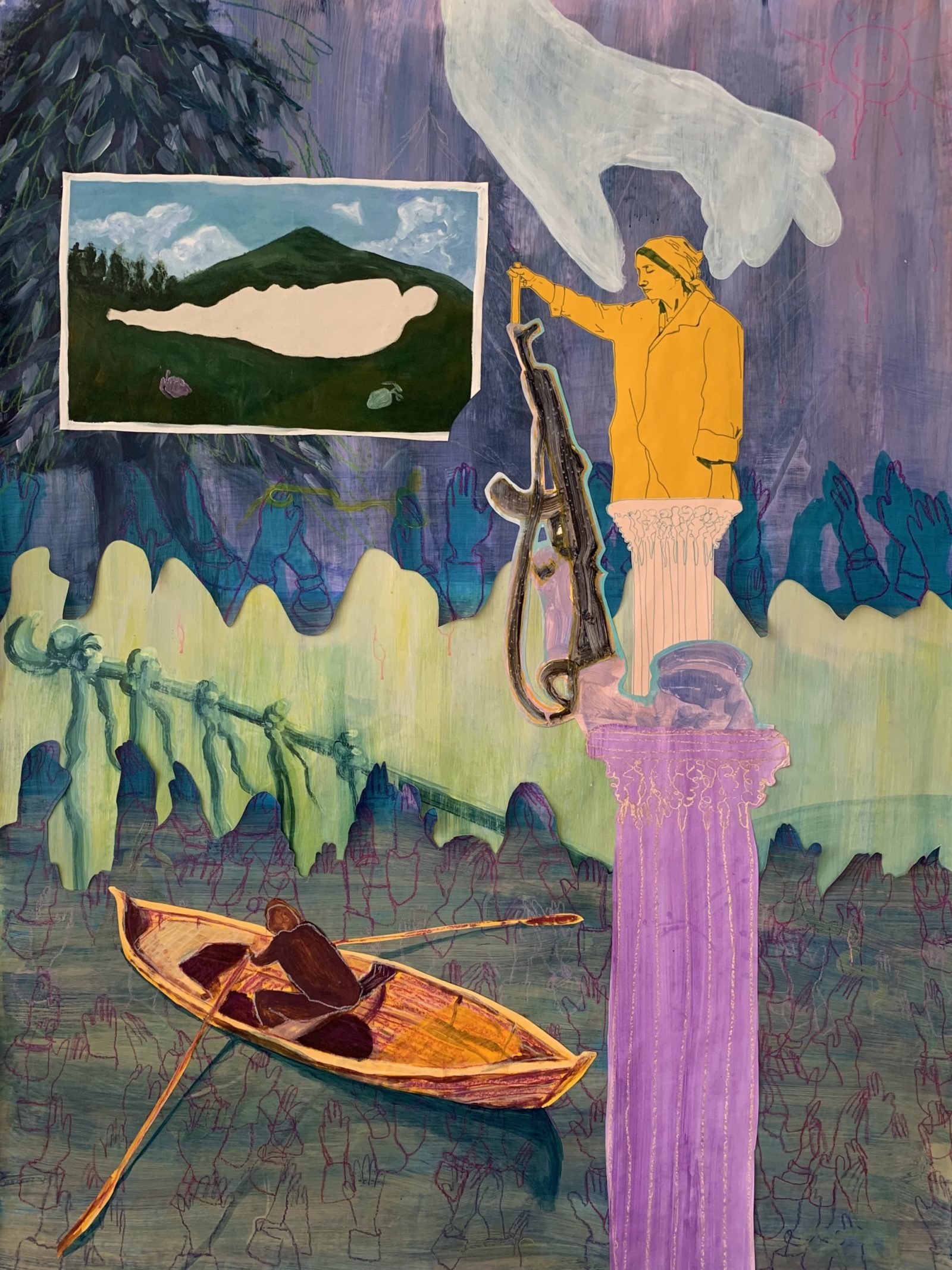
Handle with care, 2021
Mixed media
L 190 x B 145
Biografie
Elma Čavćić is a Bosnian-born artist currently living in Utrecht, the Netherlands. She studied art and education at HKU (Hogeschool voor de Kunsten Utrecht). During her years at the academy, she developed a growing interest in the stories she had heard throughout her upbringing—the stories of the Bosnian War, a war she was born into but never got to experience.
Most of these stories came up at dinner parties with her parents' friends. They would share horrific memories, sometimes in vivid detail, as if she wasn’t even there. Over time, it felt like she had turned into furniture—silent, unnoticed, absorbing everything. These moments stuck with her, shaping the way she later approached storytelling in her art.
With the Mondriaan Fund Start Stipendium, she was able to spend an extended period in Bosnia, interviewing family members and recording their stories. This trip became the starting point for many new series and marked a shift in her work toward more figurative painting.
Čavćić’s oeuvre is steeped in the theme of war. She depicts the stories of her parents and family in her paintings, where an illusory reality seems to take hold. At first glance, her works appear aesthetically pleasing—soft, delicate, almost dreamlike. But when you look closer, the horrors of war slowly reveal themselves. This subtle play with perception reflects the way trauma often lingers beneath the surface, unnoticed until you allow yourself to really see it.
By combining beauty with brutality, her work creates a tension that forces the viewer into introspection. It makes you question what you are really looking at, what is hidden, and what has been lost. The quiet, almost poetic way she approaches these themes allows space for emotion, memory, and interpretation, making the experience of viewing her work deeply personal.
Beyond war, Čavćić’s work is also about cultural heritage. She explores the intersection between personal and collective history, thinking about how memories are passed down and how they shape identity. Her paintings speak to those who have lived through war but also to those who carry inherited memories of conflict. In this way, her work becomes a conversation between generations, a bridge between past and present.
She approaches painting as a way of archiving and retelling, ensuring that the stories she grew up with are not forgotten. The figures in her paintings exist in a space between memory and reality, much like the stories themselves—recalled, retold, and inevitably reshaped over time.
Ultimately, Čavćić’s work is not just about war itself, but about the lasting impact it has on people and families. It is about remembering, feeling, and witnessing. Her paintings don’t scream for attention, but they stay with you, leaving behind a quiet unease—a reminder that history never really disappears.
Elma Čavćić is a Bosnian-born artist currently living in Utrecht, the Netherlands. She studied art and education at HKU (Hogeschool voor de Kunsten Utrecht). During her years at the academy, she developed a growing interest in the stories she had heard throughout her upbringing—the stories of the Bosnian War, a war she was born into but never got to experience.
Most of these stories came up at dinner parties with her parents' friends. They would share horrific memories, sometimes in vivid detail, as if she wasn’t even there. Over time, it felt like she had turned into furniture—silent, unnoticed, absorbing everything. These moments stuck with her, shaping the way she later approached storytelling in her art.
With the Mondriaan Fund Start Stipendium, she was able to spend an extended period in Bosnia, interviewing family members and recording their stories. This trip became the starting point for many new series and marked a shift in her work toward more figurative painting.
Čavćić’s oeuvre is steeped in the theme of war. She depicts the stories of her parents and family in her paintings, where an illusory reality seems to take hold. At first glance, her works appear aesthetically pleasing—soft, delicate, almost dreamlike. But when you look closer, the horrors of war slowly reveal themselves. This subtle play with perception reflects the way trauma often lingers beneath the surface, unnoticed until you allow yourself to really see it.
By combining beauty with brutality, her work creates a tension that forces the viewer into introspection. It makes you question what you are really looking at, what is hidden, and what has been lost. The quiet, almost poetic way she approaches these themes allows space for emotion, memory, and interpretation, making the experience of viewing her work deeply personal.
Beyond war, Čavćić’s work is also about cultural heritage. She explores the intersection between personal and collective history, thinking about how memories are passed down and how they shape identity. Her paintings speak to those who have lived through war but also to those who carry inherited memories of conflict. In this way, her work becomes a conversation between generations, a bridge between past and present.
She approaches painting as a way of archiving and retelling, ensuring that the stories she grew up with are not forgotten. The figures in her paintings exist in a space between memory and reality, much like the stories themselves—recalled, retold, and inevitably reshaped over time.
Ultimately, Čavćić’s work is not just about war itself, but about the lasting impact it has on people and families. It is about remembering, feeling, and witnessing. Her paintings don’t scream for attention, but they stay with you, leaving behind a quiet unease—a reminder that history never really disappears.
Agenda
- Bearing witness, POST arnhem25/01/202520/04/2025
- Bearing witness, POST arnhem25/01/202520/04/2025
Contactgegevens
- Elma Čavčić
- elmaa236@hotmail.com
- +31644426658
- Elma Čavčić
- elmaa236@hotmail.com
- +31644426658